
Removing a Load-Bearing Wall
Do You Need a Structural Engineer in Ontario?
Removing Load-Bearing Walls in Ontario
Structural Considerations, Design Requirements, and Practical Impacts
Open-concept living has become one of the most desirable features in modern residential design. Many homeowners in Ontario choose to remove interior walls to create larger, brighter, and more functional spaces. However, not all walls can be removed safely. Load-bearing walls play a critical role in supporting the structure of a building, and altering them requires careful engineering analysis, proper design, and compliance with the Ontario Building Code.
Understanding the role of these walls, the requirements for their removal, and the broader impacts on building systems is essential before starting any renovation.
Role of Load-Bearing Walls in Residential Structures
Load-bearing walls are fundamental structural elements that transfer vertical loads from floors, roofs, and other components down to the foundation. These walls ensure that loads are distributed safely and that the building remains stable under various conditions, including occupancy loads, snow loads, and wind effects.
In typical residential construction, load-bearing walls often:
- Support floor joists and roof rafters
- Provide lateral stability in conjunction with shear walls
- Transfer loads continuously through aligned structural elements
Removing such a wall without providing an alternative load path can disrupt the entire structural system.
Types of Materials Used for Load-Bearing Walls
Load-bearing walls can be constructed using different materials depending on the building type, age, and design:
- Wood Framing (Stud Walls): Most common in residential homes; relies on dimensional lumber or engineered studs.
- Masonry (Concrete Block or Brick): Often found in basements or older homes; provides high compressive strength.
- Concrete Walls: Used in foundations or modern construction for durability and strength.
- Steel Framing: Less common in houses but used in some modern or hybrid systems.
Each material behaves differently and requires specific considerations during modification or removal.
Requirements for Removing Load-Bearing Walls
Removing a load-bearing wall is classified as a structural alteration and must comply with the Ontario Building Code. This typically involves:
- Structural assessment by a qualified engineer
- Design of a replacement beam and support system
- Preparation of stamped drawings for permit submission
- Coordination with contractors during construction
A Professional Engineer (P.Eng.) ensures that the new structural system safely transfers loads and meets all code requirements.
What a Structural Engineer Must Consider
When designing the removal of a load-bearing wall, a structural engineer evaluates several critical factors:
- Load Calculation: Dead loads (structure), live loads (occupancy), and environmental loads
- Span Length: Distance the new beam must cover
- Load Path Continuity: Ensuring loads are transferred down to adequate supports and foundations
- Deflection Limits: Preventing excessive sagging or vibration
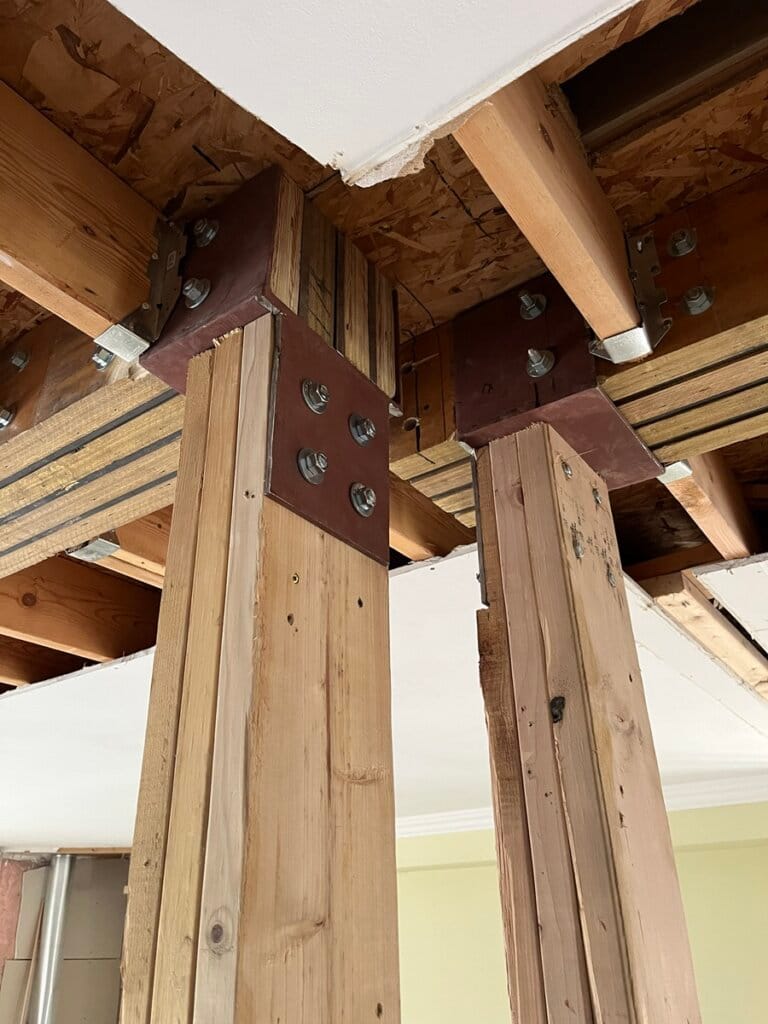
- Connection Details: Proper fastening and support conditions
- Foundation Capacity: Verifying that existing footings can support new concentrated loads
Failure to consider any of these factors can lead to long-term structural problems.
Types of Beams Used to Replace Load-Bearing Walls
When a load-bearing wall is removed, it is replaced by a beam system designed to carry the loads. Common beam types include:
Built-Up Wood Beams
- Made from multiple dimensional lumber members fastened together
- Cost-effective for shorter spans
- Common in light residential applications
LVL (Laminated Veneer Lumber) Beams
- Engineered wood product with high strength and consistency
- Suitable for longer spans and heavier loads
- Widely used in modern residential construction
Steel Beams (I-Beams or HSS Sections)
- High strength and stiffness
- Ideal for long spans or limited ceiling depth
- Often used when flush beam installation is required
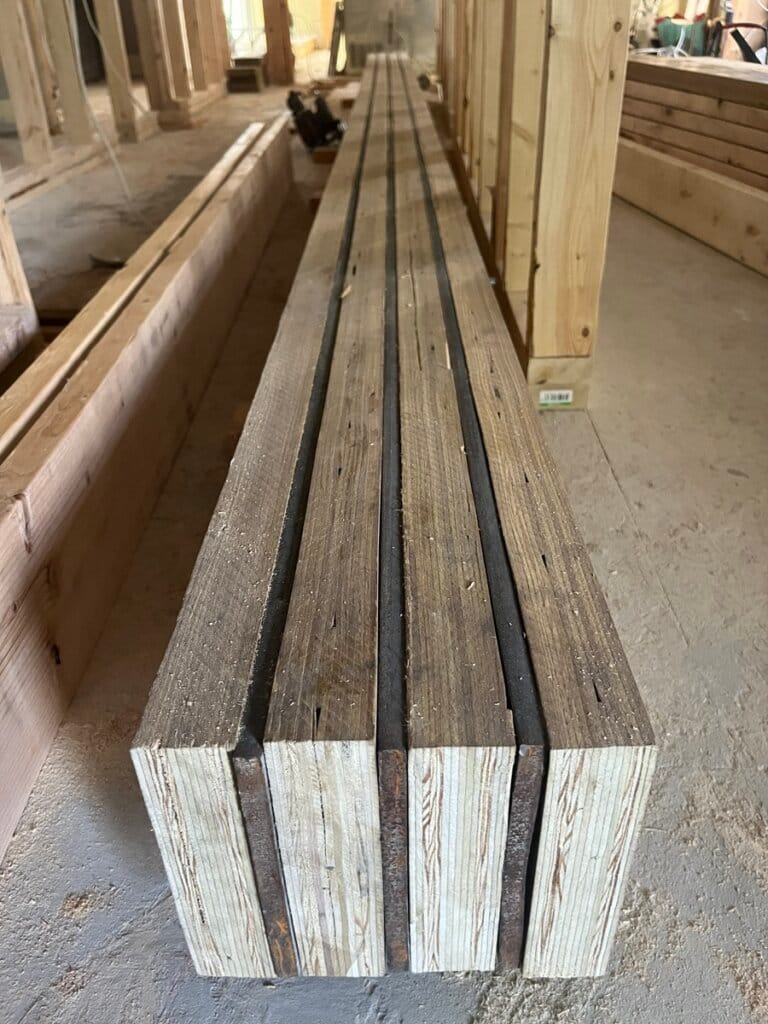
Flitch Beams
- Combination of LVL sections and steel plates
- Combination of wood blocks and steel I-beam
- Offers improved strength while maintaining wood compatibility
- Used in specialized conditions and long spans
- Often used when flush beam installation is required
The selection depends on structural requirements, available space, cost, and architectural preferences.
Open-Concept Layouts: Benefits and Structural Implications
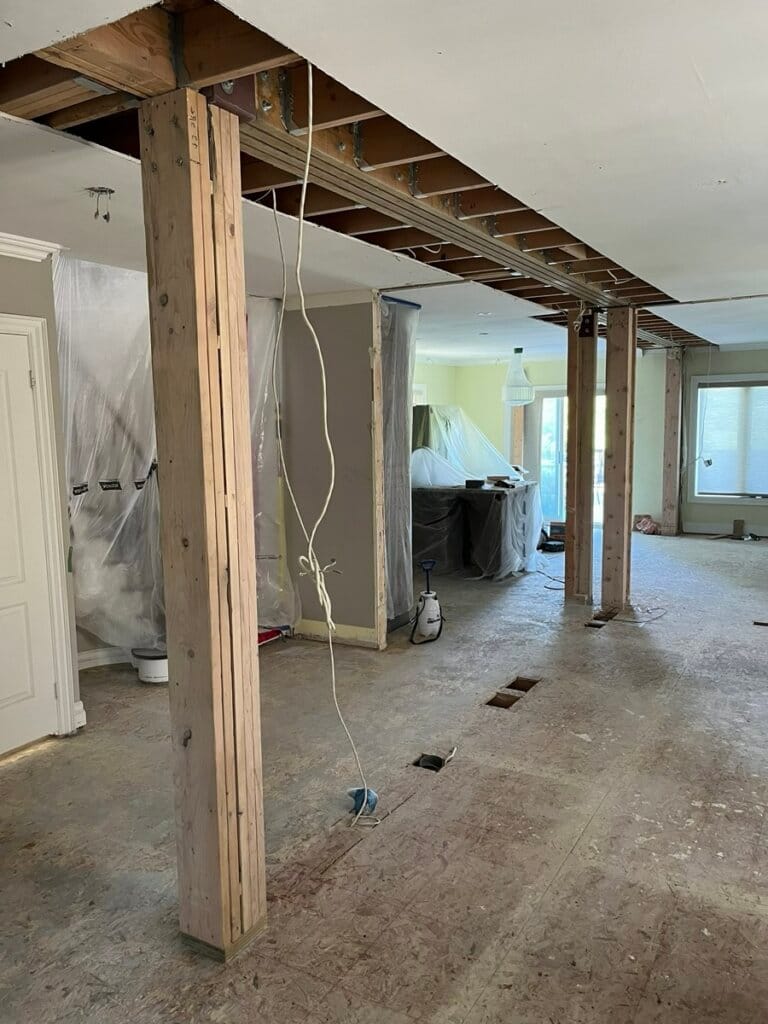
Removing load-bearing walls allows homeowners to create open-concept layouts that improve:
- Natural light distribution
- Visual connectivity between spaces
- Functional use of living areas
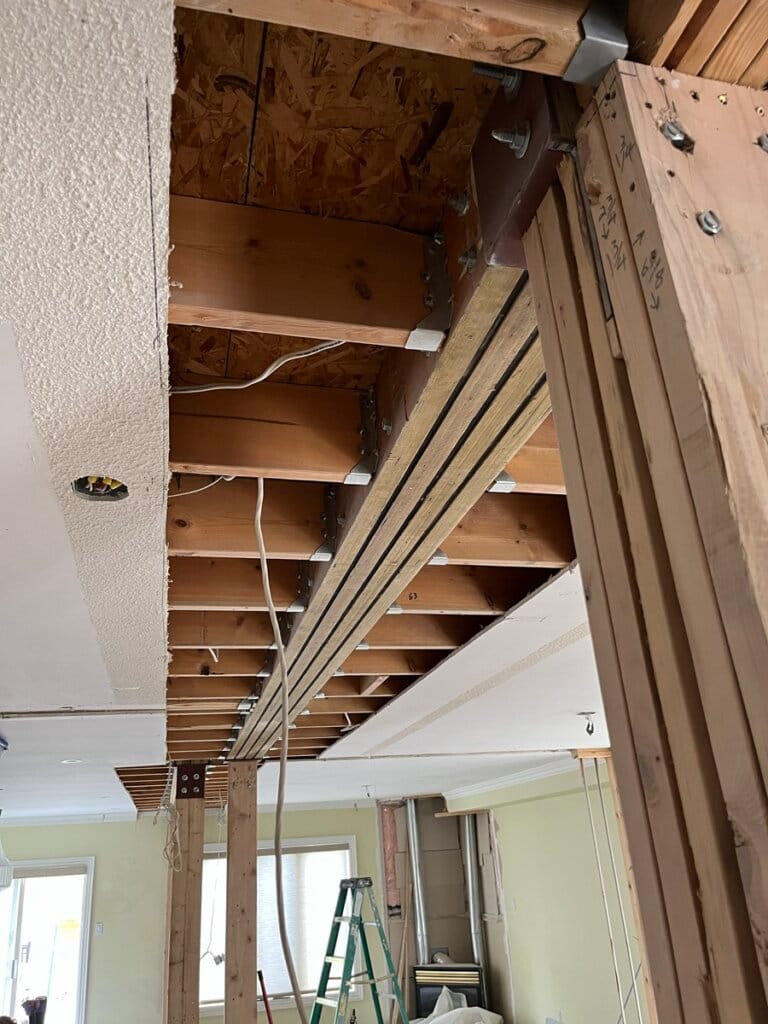
However, achieving this requires careful integration of beams into the structure. Options include:
- Flush beams (hidden within floor depth)
- Drop beams (visible below ceiling level)
Each option has structural and architectural implications that must be evaluated during design.
Impact on HVAC and Building Systems
Removing a wall can significantly affect mechanical systems, especially HVAC:
- Ductwork relocation: Walls often contain supply or return ducts
- Airflow balance: Open spaces change air distribution patterns
- Thermal zoning: Larger spaces may require rebalancing or system upgrades
- Electrical and plumbing adjustments: Wiring and pipes may need rerouting
Coordination between structural, mechanical, and electrical disciplines is essential to avoid performance issues after renovation.
Common Mistakes and Risks
Homeowners and contractors sometimes underestimate the complexity of removing load-bearing walls. Common mistakes include:
- Assuming a wall is non-structural
- Installing undersized beams
- Ignoring foundation capacity
- Failing to obtain permits
- Poor coordination between trades
These issues can result in costly repairs, failed inspections, or unsafe conditions.
Conclusion
Removing a load-bearing wall is a transformative renovation that can greatly enhance a home’s functionality and value. However, it is also a complex structural modification that must be approached with proper engineering design and regulatory compliance.
Working with an experienced firm such as Deltoid Consulting Inc. ensures that your project is handled professionally—from structural analysis and beam design to permit drawings and construction support.
By combining sound engineering with thoughtful design, homeowners can safely achieve open-concept spaces while maintaining the integrity and performance of their homes.
📞 Need Help With Your Building Permit?
If you are planning a project for removing a load-bearing wall and want to avoid delays, working with an experienced team can make the process significantly smoother. From zoning review to permit approval, proper coordination is key to a successful project.
👉 Contact Deltoid Consulting Inc. to discuss your project and get started with your building permit application.